

How to have a green lawn using 50% less water
Most lawns waste 30%-50% of their water through poor irrigation timing, runoff, and shallow watering. You can cut water use in half while keeping your lawn green by installing smart irrigation controllers, raising mowing height, and improving soil moisture retention.
These strategies work for all grass types and can reduce your water bill within one to two billing cycles. The key is watering smarter — not more often.
In this article, Lawn Love explains 10 proven strategies to save water without sacrificing turf quality.
Key takeaways
- Smart irrigation controllers save up to 15,000 gallons annually by adjusting to weather and soil moisture.
- Raising mowing height 0.5-1 inch in summer reduces water needs and strengthens root systems.
- Proper irrigation zones prevent overwatering shaded areas while ensuring sunny spots get adequate moisture.
- Drought-tolerant grasses like tall fescue and Bermuda grass need significantly less water than traditional varieties.
1. Install smart irrigation controllers
Traditional timers run on a set schedule, watering your lawn even when it's unnecessary — like right after a rainstorm. Smart systems measure environmental factors like temperature, humidity, precipitation, and wind speed in real time to water your lawn only when it needs it.
“Smart controllers can signal your system when the soil has adequate moisture or when water demand is low, so it can skip a cycle and save water,” says Grady Miller, professor and extension turfgrass specialist at North Carolina State University.
EPA WaterSense estimates that replacing a standard clock timer with a WaterSense-labeled irrigation controller can save up to 15,000 gallons of water annually. If every U.S. home with an automatic sprinkler system used these controllers, it could save $2.5 billion in water costs and 220 billion gallons nationally.
Most modern irrigation controllers adjust watering based on weather forecasts, pausing if rain is imminent and watering more during drought or heat waves.
Choose a system with mobile-app control so you can monitor and adjust watering from anywhere. Smart irrigation systems cost $150 to $250, depending on features and zone customization.
2. Monitor soil moisture
Soil moisture sensors measure moisture levels and tell your system when it needs water. For lawns under 2,000 square feet, one sensor covers the entire area. Larger lawns need one sensor per zone.
Here are some tips to install soil moisture monitoring sensors the right way:
- Choose a spot that reflects average moisture for that section, not the wettest or driest spots.
- Place the sensor one-third of the way down into the root zone.
- Position horizontally rather than flat so it measures water passing by, not pooling on top.
- Remove stones from soil and water after installation to eliminate air pockets.
3. Optimize your irrigation schedule
Schedule your smart irrigation controller properly to maximize savings. Your lawn needs 1 to 1.5 inches of water per week during peak grass-growing season, including rainfall.
How much water does your lawn need per week?
Use this simple tuna can test to calculate run time:
- Place tuna cans around your lawn randomly.
- Run your sprinklers for 15 minutes and check the water level in the cans.
- If you accumulate ¼ inch of water in 15 minutes, you're getting 1 inch per hour.
- Therefore, run for 60-90 minutes total per week.
Check if water levels are uniform across all cans. If one has more or less, inspect spray patterns or sprinkler heads for clogs and adjust for better coverage.
Go for head-to-head spacing so each sprinkler's spray reaches the next sprinkler head for optimal coverage.
Schedule smart systems to water every other day or three times weekly. Never water daily — it encourages shallow roots that weaken grass. The best time to water is between 5 a.m. and 9 a.m. when there's less wind and evaporation.
Should I water differently in summer vs. winter?
Your watering schedule shouldn't stay the same year-round:
- Cool-season grasses: Need 1-1.5 inches weekly in spring and fall (active growth), 0.5 inches in hot summer, no watering in winter dormancy
- Warm-season grasses: Need most water from late spring through summer, about 0.5 inches in early spring and fall, no watering in winter dormancy
4. Zone your irrigation system
Not all sections of your lawn need the same water. Sunlight, shade, soil type, and slope create microclimates where small sections retain or lose moisture differently.
Divide your lawn into zones based on water needs:
- Full sun zone: Regular watering (water dries faster)
- Partially shaded zone: Moderate watering
- Shaded zone: Retains moisture longer (water less often)
- Sloped zone: Water runs off quickly (water more frequently but in shorter cycles)
Each zone should have its own run time, watering frequency, and nozzle type. Set soil moisture thresholds for each zone so your system waters only when that area needs it.
Don't add more than six sprinklers to a single zone — this can overload it and reduce coverage. Instead, create an extra zone.
If your current irrigation system isn't zoned, retrofit it by installing separate valves and controllers, then wire them to the main controller.
Research shows that properly zoned irrigation systems can improve efficiency by 20% or more.
5. Increase your mowing height
In summer, raise your mowing height by 0.5 to 1 inch to reduce water evaporation and help grass stay cooler. Taller grass shades the soil and encourages deeper root growth, so your lawn can draw moisture from deeper in the soil.
“There is a relationship between mowing height and rooting depth. Keeping your turfgrass at the higher end of the suggested mowing range can maximize rooting depth,” says Miller of NC State.
Research from Oregon State University found that cool-season grasses maintained at 2 inches required less frequent irrigation than those mowed at 5/8 inch, demonstrating that higher mowing heights help conserve water.
If you're growing cool-season grass in the transition zone, leave grass half an inch taller from late spring to late summer. This works for both cool- and warm-season grasses in any zone and can save at least 10% water over the season.
Here’s how high to cut your grass during summer:

Lawn Love
6. Improve your soil’s ability to retain moisture
Lawn Love
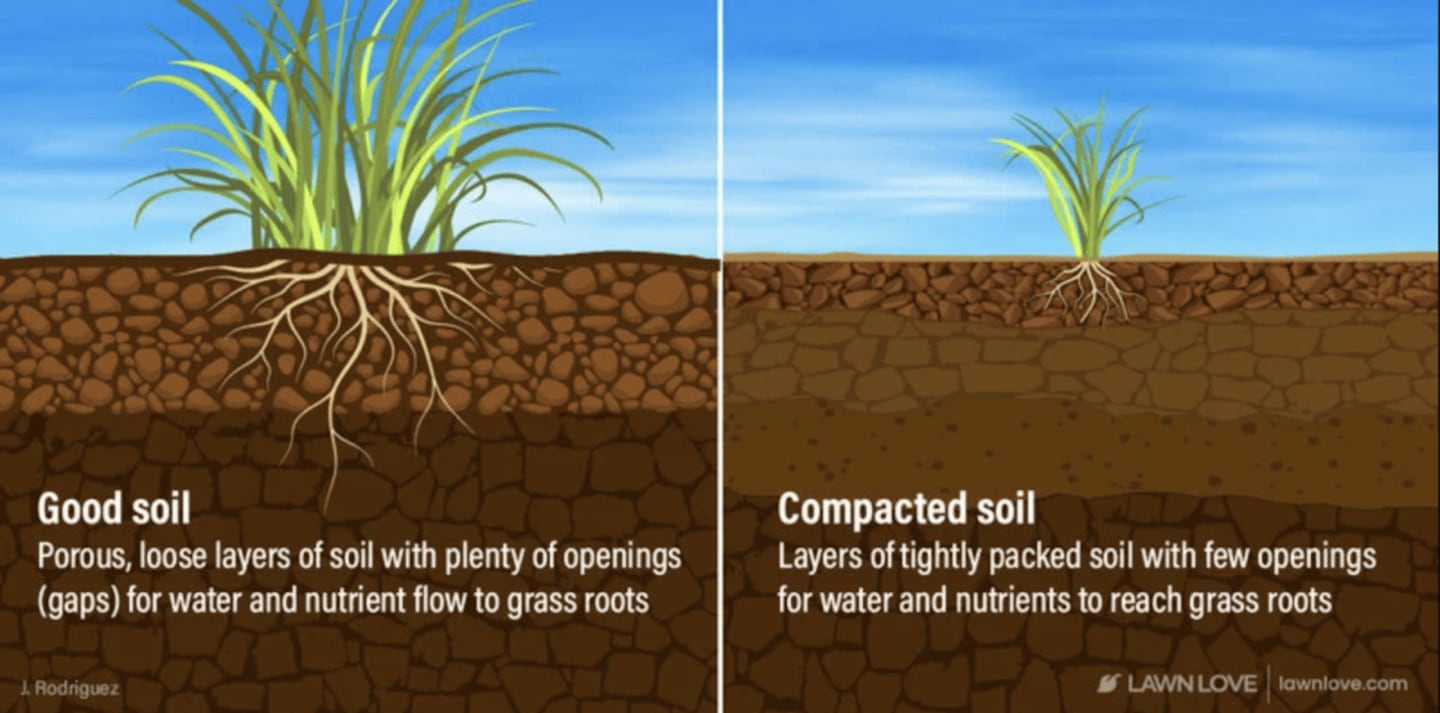
If your soil doesn't hold moisture well, your grass will need more water. Check for compaction first — it prevents water from reaching the grass roots.
Test for compacted soil by pushing a medium to large Phillips screwdriver into the ground. If it doesn't sink easily to the handle, your soil is compacted.
USDA research shows that compacted soil can reduce water infiltration by three to 30 times, depending on load and soil type. This means most water runs off instead of reaching the grass roots.
Fix compacted soil by aerating annually for clay soil or every three years for sandy or loamy soil. Aeration creates tiny holes that allow oxygen, water, and nutrients to reach the roots.
For sandy soil, add amendments like compost or biochar. Spread ¼ to ½ inch over your lawn and rake this into the top 1 to 2 inches without disturbing grass roots. Water thoroughly afterward.
Miller says, "Soil amendments make a noticeable difference only in very sandy soils, and compost is usually the most cost-effective option."
Mulching grass clippings also retains moisture. If water pools or creates dry spots after irrigation, your soil may be hydrophobic — wetting agents can help.
7. Reduce the size of your lawn with creative landscaping
Keep grass in your front yard, outdoor living spaces, and sections where you walk, play with your kids, or entertain. Reduce or replace grass in side yards, narrow strips, and steep slopes — these areas waste water through overspray or runoff.
Replace these grassy areas with drought-resistant ground covers or mulch. If you have a shady area where grass struggles (like under large trees), replace it with a mulch bed and shade-loving perennials. You'll save water and won't repeatedly overseed thin grass.
Converting 10% to 20% of your grassy lawn into low-water landscaping is well worth the effort. Many municipalities offer rebates for grass removal.
8. Strategically water trouble spots
Your sprinkler system covers most of your lawn, but some areas like slopes, under trees, or corners dry out faster.
How do I know if my grass needs water?
“Moisture-stressed grass appears blue-green or grayish-green, recuperates slowly after walking or driving across it, or wilts continuously,” Miller says.
If you notice these symptoms in isolated spots, water only those areas instead of running the entire sprinkler system. This targeted approach saves significant water compared to irrigating your entire lawn.
9. Fertilize wisely
The way you fertilize directly impacts water needs. Over-fertilization increases water demand and can damage grass roots, preventing water absorption.
Keep fertilization simple: Test your soil first so you add only missing nutrients. Choose slow-release fertilizer that feeds gradually (unless your lawn is newly seeded). Follow label instructions to avoid over-fertilizing.
Fertilize cool-season lawns in early spring and early fall. For warm-season lawns, fertilize from late spring through early summer. Don't fertilize when it's too hot or during drought — this stresses grass and increases water needs.
Professional fertilization services apply the right nutrients at optimal times without over-fertilizing.
10. Overseed with drought-tolerant grasses
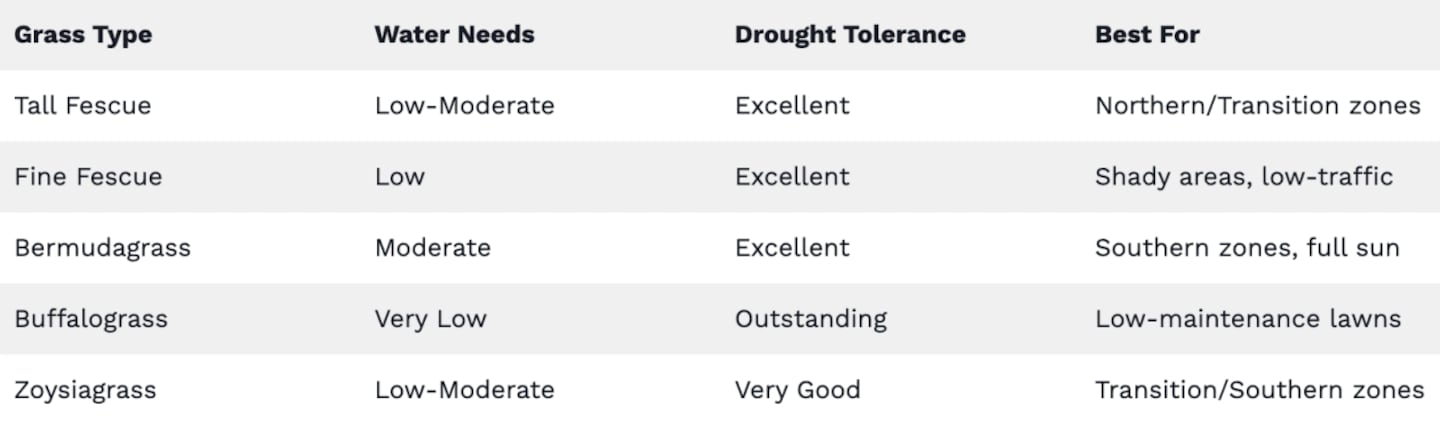
Some grasses need significantly more water than others. Keep your lawn green with less water by overseeding with drought-tolerant varieties.
Best drought-tolerant grasses by region:
Lawn Love
When to overseed:
- Cool-season grass: Early fall (best) or early spring when summer temperatures drop, but soil is still warm.
- Warm-season grass: Late spring or early summer when grass is actively growing.
Grass seeds need active growth periods to germinate and develop strong roots.
FAQs
Can I use greywater to irrigate my lawn?
Yes, in many areas. Greywater from showers and washing machines can reduce potable water use by 30%-40%. Check local regulations first, as some municipalities restrict greywater use. Avoid water containing harsh chemicals or bleach.
How do I know if my sprinkler system is wasting water?
Run your sprinkler system during daylight and check for misting (sign of high pressure), runoff, overspray onto hardscapes, or uneven coverage. EPA research shows that 30%-60% of irrigation water is wasted due to leaks, broken sprinkler heads, and poor scheduling. A single broken sprinkler head can waste up to 25,000 gallons per year.
Do drip irrigation systems work for lawns?
Drip irrigation works well for landscape beds but is impractical for large lawn areas. For small lawn sections or newly seeded areas, subsurface drip systems can reduce water use by 30%-50% compared to sprinklers.
How soon will I see savings on my water bill?
If you use a smart irrigation system, optimize your watering, improve your soil health, and overseed with drought-tolerant grasses, you’ll start to see a noticeable reduction in your water bill within the first one to two billing cycles.
What's the payback period for a smart irrigation investment?
You can get back your initial investment in a smart irrigation system within a year or two, depending on the size of your lawn. Larger lawns usually see a faster payback.
Keep your lawn green with less water
You don’t need to use gallons of water every week to keep your lawn lush, green, and healthy. Installing smart irrigation, raising your mowing height, improving your soil health, and overseeding with drought-tolerant grasses can help you cut water use by 50% or even more without sacrificing curb appeal.
This story was produced by Lawn Love and reviewed and distributed by Stacker.
/cloudfront-us-east-1.images.arcpublishing.com/cmg/XCUXZC2XYZHCRGNNGKFEX6U3LQ.png)


