PITTSBURGH — The 2019 novel coronavirus, dubbed COVID-19, continues to spread around the world. Since reaching the US, people living on dozens of states have been sickened, including here in Pennsylvania and nearby in Ohio.
Have questions about the spread of the coronavirus? We have an entire section dedicated to coverage of the outbreak. CLICK HERE for more.
Update 10:15 p.m.:
The NHL has announced that it will take the coronavirus spread day-by-day and at this point is not canceling or suspending its season.
National Hockey League Statement Regarding Coronavirus: https://t.co/AKrmh8ao4F pic.twitter.com/PZ7dQBbGVB
— NHL Public Relations (@PR_NHL) March 12, 2020
Update 9:38 p.m.:
The NBA is suspending its season after tonight’s games until further notice because of the coronavirus concerns.
The NBA has suspended the season in the wake of the Coronavirus Crisis. Its official statement: pic.twitter.com/x3X6pddmSq
— Marc Stein (@TheSteinLine) March 12, 2020
Update 7:54 p.m.:
Gov. Tom Wolf, in consultation with the Department of Health, provided direction on travel and large gatherings for state agencies and employees under the governor’s jurisdiction.
“We are taking this action in the best interest of all commonwealth employees as we continue to respond swiftly and appropriately to the outbreak of COVID-19,” said Gov. Wolf. “Many state employees are working on the front lines with federal and local partners to coordinate efforts. I thank you for your commitment.”
The new directives for commonwealth employees take effect immediately and are consistent with the governor’s emergency disaster declaration and based on the Pennsylvania Department of Health and CDC’s recommendations:
- No international travel for official commonwealth business.
- No out-of-state travel for official commonwealth business unless determined to be mission critical by agency heads.
Large meetings, conferences, trainings, and community events:
- Postpone hosting or participating in large meetings, conferences, trainings, or community events unless approved by the Governor’s Office.
- If a large gathering must be held in person, approval by the Governor’s Office is required.
- Consider virtual large gatherings as an alternative.
The governor also provided employee guidance for those missing work due to COVID-19.
Temporary/Emergency Telework:
- Employees who are in COVID-19 quarantine, but otherwise healthy and able to work, may be authorized for telework by their supervisors in cooperation with human resources.
- Remote work arrangements under this policy are temporary and specific to COVID-19 self-quarantine.
Expansion of Leave and Paid Status for Impacted Employees:
- If a quarantined employee is unable to telework, the employee can seek approval to stay home from work with no loss in pay for up to 10 workdays (during the 14-day quarantine period).
- This release from work with pay would be a very rare outcome, and we will explore all options short of this step so we can provide vital services to the commonwealth citizens.
UPDATE 6:50 p.m.:
A Pittsburgh Public School employee is under self-quarantine out of “extreme caution."
The following is a letter sent home to PPS families:
"This message is to let you know the District has been notified that an employee of the District has family member from the Eastern part of the state that recently came home and is under self-quarantine due to potential exposure of the Coronavirus at a conference in Washington DC.
As part of the District’s protocol and out of extreme caution, this employee is self-quarantined at home for at least the next 14 days. This employee was placed under self-quarantine prior to her child returning home to Pittsburgh. Therefore, there is no concern that our students, staff or families are at risk. Neither the employee nor the employee’s college-aged child have been confirmed as testing positive with the Coronavirus.
As a matter of transparency, we felt it was important to share this information with you.
I want to remind everyone there are no confirmed cases in Allegheny country. We continue to work closely with the Allegheny county health department and are monitoring what other organizations and schools are doing around the region and will continue to update you as new information becomes available.
As a reminder, please keep stay home if you or your child is exhibiting symptoms of the flu and a fever."
UPDATE 5:50 p.m.:
The Columbus Blue Jackets have announced that they will limit attendance for Thursday’s home game against the Pittsburgh Penguins.
The games will be closed to the public, with admission to games limited to home and visiting club personnel, credentialed media and broadcast partners, essential club and arena staff and NHL officials.
UPDATE 3/11 4:00 p.m.
The Pennsylvania Health Department said there are now 16 cases of coronavirus in Pennsylvania
The latest case is in Monroe County.
Secretary of Health Dr. Rachel Levine said 173 Pennsylvanias have been tested for the virus.
Out the 173 people that were tested:
- 100 came back negative
- 14 presumptive positives
- 2 confirmed positives by the CDC
- 57 pending tests
Levine also said there is another adult is hospitalized in Monroe County, but they are not being counted in our numbers because they do not live in Pennsylvania.
#COVID19 Update: PA has 14 presumptive positive + 2 confirmed cases of coronavirus. Total cases = 16
— PA Department of Health (@PAHealthDept) March 11, 2020
Counties impacted to date:
✔️ Bucks (2)
✔️ Delaware (1)
✔️ Monroe (2)
✔️ Montgomery (9)
✔️ Philadelphia (1)
✔️ Wayne (1)
Latest info: https://t.co/7pzosEXhEX pic.twitter.com/xCKbiGPTij
Everything you need to know:
Pittsburgh Penguins
The Pittsburgh Penguins said that Sunday’s game against the New York Islanders at PPG Paints Arena will continue as scheduled. Team officials said they have been in regular contact with the NHL, CDC, city officials and health experts as the coronavirus continues to spread.
Team officials added there have been a number of safety procedures implemented including food handlers, ticket takers and ushers wearing gloves. Other new measures include:
- Regular cleaning of escalator handrails, stairway railings, door handles and elevator buttons with disinfectant
- Regular cleaning and sanitizing of arena public areas and rest rooms
- Reconfiguration of common food-serving areas and services
- CDC advisory signs posted in rest rooms, advising fans of safety recommendations for washing hands, etc.
- Hand sanitizers placed around the arena
The Penguins say home games will go on, as planned, in front of fans. #Pens #Corona pic.twitter.com/Wm8cqu6iZ1
— Chase Williams (@chasepwilliams) March 11, 2020
Guests who are feeling sick or who have traveled to high risk areas are urged to not attend the games.
City of Pittsburgh
Daniel Gilman, Chief of Staff for Mayor Bill Peduto, said the city will be cancelling all meetings where a crowd of over 50 people is expected. Additionally, all international travel will be suspended for city employees. Domestic travel decisions will be on a case-by-case, emergency basis.
Director of Public Safety Wendell Hissrich also said the city will be sending letters to bars and restaurants asking owners to limit occupancy due to the coronavirus. Inspectors will be patrolling during the weekend checking how many people are in establishments, issuing fines as necessary and shutting facilities down if needed.
WATCH: Pittsburgh Public Safety Director says he’s ‘concerned’ about potential of coronavirus
“I’m concerned. I am concerned especially for the elderly. For whatever reason, it doesn’t seem we are having young children, and infants get sick, but the problem is number one we have to maintain the day-to-day care of everyone. We are into the flu season and then you put this on top of it. So we could exceed our capabilities. That’s why we are preparing with extra medic units, and extra staffing. So I am concerned. I try not to use the word panic but there is concern out there and I think there’s a concern across the US," Hissrich said.
Hissrich said he has dealth with anthrax attacks and the Ebola virus during his time with the FBI. But he said in his 40 years of public service he has never seen anything like the coronavirus.
RELATED: University of Pittsburgh extends Spring Break, moves classes online for remainder of the semester
Chief Operations Officer Kinsey Casey is developing a plan on that can be used if a large number of employees is not be able to work in person, including work-from-home plans, and reviews by Innovation & Performance officials of the city’s technological capacities.
First responders in the city are being given extra personal protection equipment, including gloves, masks, eyewear and sanitizer. They are also being trained to recognize the symptoms and protocol for encountering someone who may have the virus.
Additionally, the Pittsburgh St. Patrick’s Day parade has been cancelled.
So far there are no cases in Pittsburgh or Allegheny County, but that is expected to change.
City Cancelling St. Patrick's Day Parade Due to COVID-19https://t.co/XePBwbxZLN
— Daniel Gilman (@danielgilman) March 11, 2020
Pennsylvania Cases
Wednesday morning, state health officials announced there are now 15 confirmed cases of coronavirus in Pennsylvania. Two of the latest cases are in Bucks County and a third is in Montgomery County.
In all, there are nine cases in Montgomery County, two in Bucks County, one in Wayne County and one each in Monroe, Philadelphia and Delaware counties, according to officials.
Personal protective equipment is being used to keep healthcare workers safe and all of the patients are in quarantine.
The Allegheny County Health Department said Wednesday morning there are still no cases in Allegheny County, but it expects that to change in the upcoming days and weeks.
Secretary of Health Dr. Rachel Levine said health experts expect to start seeing community spread cases, meaning the infected person has not traveled to areas where there is a widespread outbreak.
Have questions about the spread of the coronavirus? We have an entire section dedicated to coverage of the outbreak. CLICK HERE for more.
One person with the illness in Montgomery County is an adult and is being cared for at a hospital at the University of Pennsylvania. They were in critical condition at last check. Two other people are being treated at hospitals but, citing privacy concerns, Levine did not release details about which hospitals.
RELATED:
“We anticipated this very scenario and have been preparing for Pennsylvanians to become impacted by this virus,” Pennsylvania Gov. Tom Wolf said. “This is not the first rapidly spreading virus we have faced in our commonwealth and it will not be the last. We are prepared to mitigate the spread of this virus.”
Today we have our first two confirmed cases of Coronavirus in Pennsylvania.
— Governor Tom Wolf (@GovernorTomWolf) March 6, 2020
I want to assure Pennsylvanians that we are prepared for this. This is not the first rapidly spreading virus we have faced, and it certainly will not be our last. #COVID19 pic.twitter.com/3diAywJIwE
Pennsylvania’s first two confirmed coronavirus cases, according to health officials, were not related to members of the Central Bucks School District community in eastern Pennsylvania who were exposed to a confirmed case, leading to the cancellation of classes at five schools.
>>STORY: Eastern Pa. district closes 5 schools over reported coronavirus exposure
Wolf assured Pennsylvanians that the state is prepared to respond to the spread of the coronavirus.
“The confirmation of a case of coronavirus is not a surprise to us, and we’ve been working with the Department of Health since January to ensure that we’d be ready,” Pennsylvania Emergency Management Agency Director Randy Padfield said Friday. “Earlier this week, we partially activated the Commonwealth Response Coordination Center here at PEMA in order to support their planning efforts.”
LATEST: Live updates on the coronavirus

Allegheny County Health Department Preparations
Coronavirus test kits have been limited, but that is changing, officials said Monday. Currently, testing in Pennsylvania is done only through the state’s department of health.
It’s estimated by the Allegheny County Health Department that it could be months before it receives testing kits. However, local hospitals are developing their own testing.
RELATED: 3 cases confirmed in the Cleveland area
Dr. Lee Harrison, chair of the board of health, said the Health Department has been in regular contact with the Centers for Disease Control and Prevention.
In addition, the Health Department has been working with Pittsburgh International Airport and the Port Authority of Allegheny County on preparations, Dr. LuAnn Brink, ACHD chief epidemiologist, said.
You can customize your WPXI News App to receive breaking news alerts. CLICK HERE to find out how.
. @HealthAllegheny says there’s no reason for healthy people to wear protective masks. Locally, doctors say only people with respiratory issues need to wear masks. They ask for people not to hoard masks so a shortage doesn’t develop. #coronavirusus pic.twitter.com/jOT4uKxFia
— Aaron Martin (@WPXIAaronMartin) March 2, 2020
As for Allegheny County EMS, procedures have already been implemented to help identify 911 callers who could have the coronavirus, officials said.
Anyone who shows COVID-19 symptoms, which include fever, cough and shortness of breath, is asked by the Health Department to call ahead before going to a doctor’s office or emergency room to help prevent any sort of spread. They do not think Pittsburgh is a high-risk area, however.
“We have less international travel than places like New York or California. I won’t say it’s not possible, and we do expect to see cases in the coming weeks for sure,” Dr. Kristen Mertz said.
RELATED: Asian restaurants, students facing impacts due to coronavirus

AHN Changes Patient Visitation Rules
New rules for visiting patients are being implemented by Allegheny Health Network because of the coronavirus, as well as the flu.
The new temporary policy will limit the number of visitors in a patient’s hospital room to one.
In addition, people who might be sick are being asked to not visit AHN hospitals unless they are seeking treatment.
“At a time of heightened public health concerns related to both COVID-19 and a particularly severe influenza season, it is critical that we take every step possible to protect our patients and caregivers from the risk of exposure to infectious disease,” Dr. Brian Parker, AHN’s chief quality officer, said in a statement. “Patient and caregiver safety is our highest priority and we greatly appreciate the support and cooperation of visitors in the efforts we are making to minimize health risks to their loved ones.”
To promote a safe environment throughout AHN’s hospitals -- including in waiting rooms, lobbies and other common areas -- large groups are being discouraged from showing up to visit individual patients.
READ MORE: Coronavirus, flu have AHN changing rules for visiting patients
UPMC Preparations
UPMC officials said they have sent out testing samples to the state as the coronavirus outbreak continues.
Doctors there said they were mainly focusing on those people who had traveled to areas where there were confirmed cases or if they had come into contact with people infected. Hospital officials also said they were working to create their own COVID-19 test kits.
UPMC hospital officials said last week they have a plan in place to deal with the coronavirus at its hospitals.
“We still have not had any cases in need of COVID-19 testing based on the collaborative expert decision making that we’ve already had in process for weeks,” Don Yealy, M.D. chair of the Department of Emergency Medicine UPMC and University of Pittsburgh, said. “We are proactively trying to find cases. We’re not waiting for them to become one in front of us and become obvious.”
While no one at UPMC’s hospitals has been tested for the coronavirus, hospital officials are working to develop their own test to quickly identify potential cases. There isn’t a timetable when the test will be available.

All PA Insurance Companies Covering Coronavirus Testing
All major health insurers in the state are covering medical care and testing for COVID-19, according to Gov. Tom Wolf. His office said the list includes:
- Highmark
- UPMC Health Plan
- Geisinger
- Independence BlueCross
- Capital Blue Cross
- Aetna
- Cigna
- UnitedHealthcare
- Pennsylvania Health & Wellness
- Oscar
Highmark issued the following statement:
“With COVID-19 (or the coronavirus) commanding the news, Highmark understands that this issue is of great concern for our health plan members. In an effort to address the spread of the coronavirus and bring peace of mind to our members, Highmark will cover coronavirus testing, when recommended by a medical professional, for members of our fully-insured group customers, as well as members of our Medicare Advantage and ACA plans. At their discretion, our self-insured health plan sponsors will be able to opt-out of this program.”
Travel and Public Transit Prevention
Local mass transit organizations including the Port Authority and Allegheny County Airport Authority are taking extra precautions to keep travelers safe.
The Port Authority has issues specific guidelines for riders as well - which include washing your hands, changing your seat if you’re near a person showing symptoms and sitting down to avoid holding poles or straps that can transmit germs.
WATCH: Port Authority taking extra steps to help protect riders from spread of coronavirus
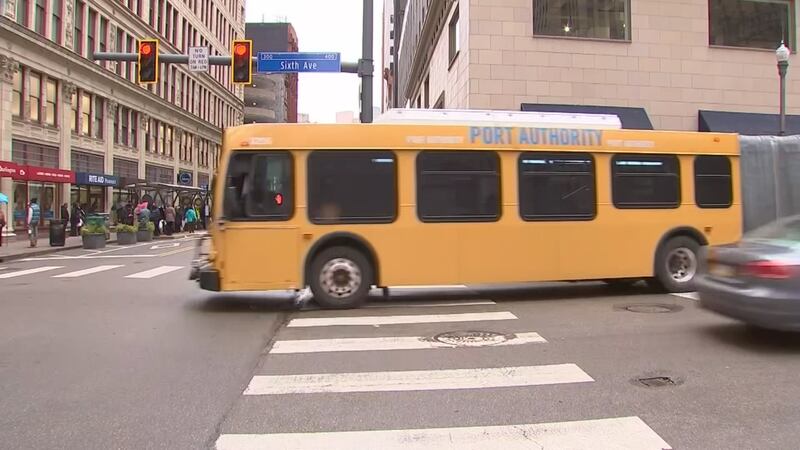
At Pittsburgh International Airport, intensified cleaning operations are underway and any decision on flight or travel restrictions are up to the federal government or individual airlines.
Pittsburgh International Airport doesn’t have any nonstop flights to China, Italy, South Korea or Iran, countries the virus has heavily impacted.
Local Dioceses Suspending Parts of Mass
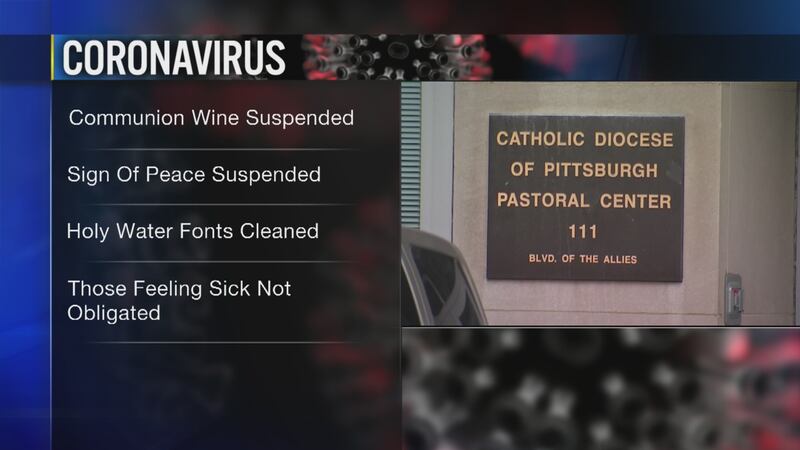
Several local Catholic dioceses, including Pittsburgh and Greensburg, have announced a number of changes in response to the global spread of coronavirus.
These changes include suspending the exchange of handshakes during the Sign of Peace and distribution of the Precious Blood during communion.
RELATED: Local dioceses making changes over coronavirus concerns
A Diocesan Bishop is responsible for promoting, regulating, and being vigilant over the liturgical life in his diocese. As such, I am instituting precautions that will serve as preventative steps to help our faith community, and the region as a whole, stay healthy. That is my primary focus,” Bishop Zubik said.
WATCH: Diocese of Pittsburgh suspending part of communion over coronavirus concerns
Local Schools and Universities
If there is an outbreak locally, school districts and the Health Department will determine whether schools should be closed.
In the Steel Valley School District, two employees who traveled to a foreign country have been told to stay away from school property as a precaution.
Meanwhile, local universities are recalling students who are studying abroad and canceling trips planned for the near future.

How it Spreads, Prevention and Treatment
The coronavirus is spread through close contact. Doctors say people can get it from an infected person who coughs or sneezes on them.
According to the CDC, recommends taking the following preventive actions to help prevent the spread of respiratory diseases:
- Avoid close contact with people who are sick.
- Avoid touching your eyes, nose, and mouth.
- Stay home when you are sick.
- Cover your cough or sneeze with a tissue, then throw the tissue in the trash.
- Clean and disinfect frequently touched objects and surfaces using a regular household cleaning spray or wipe.When it comes to masks, officials said there’s no reason for healthy people to wear them, and they ask that people not hoard them to avoid a shortage. Only people with respiratory issues need to wear masks, according to doctors.
- Wash your hands often with soap and water for at least 20 seconds, especially after going to the bathroom; before eating; and after blowing your nose, coughing, or sneezing.
- If soap and water are not readily available, use an alcohol-based hand sanitizer with at least 60% alcohol. Always wash hands with soap and water if hands are visibly dirty.
There is no vaccine for the coronavirus, but a clinical trial is taking place in Kansas.
Click here to read more about the coronavirus from the CDC.

© 2020 Cox Media Group
/cloudfront-us-east-1.images.arcpublishing.com/cmg/XCUXZC2XYZHCRGNNGKFEX6U3LQ.png)


